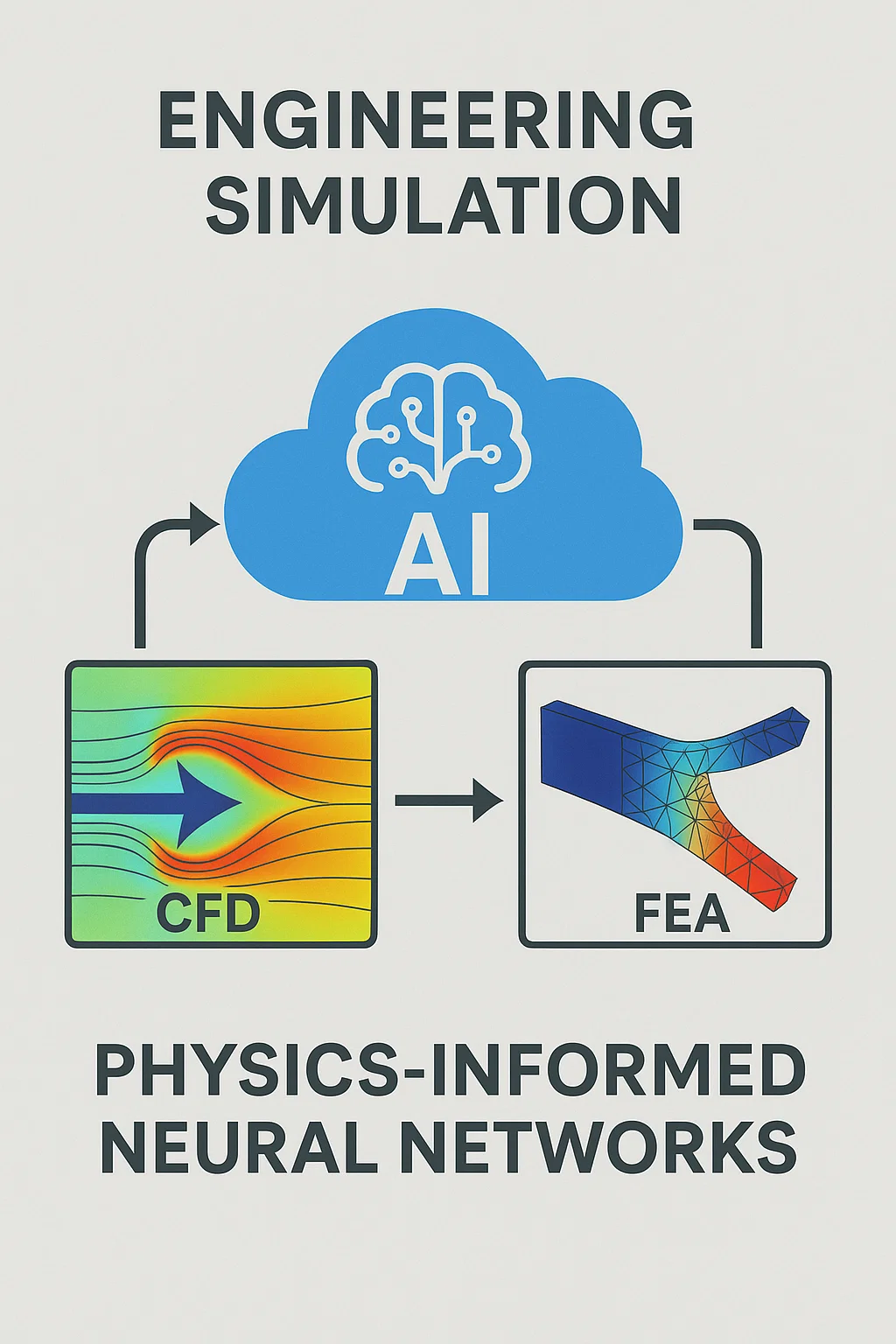
Integrated AI & Machine Learning with CFD & FEA Simulation
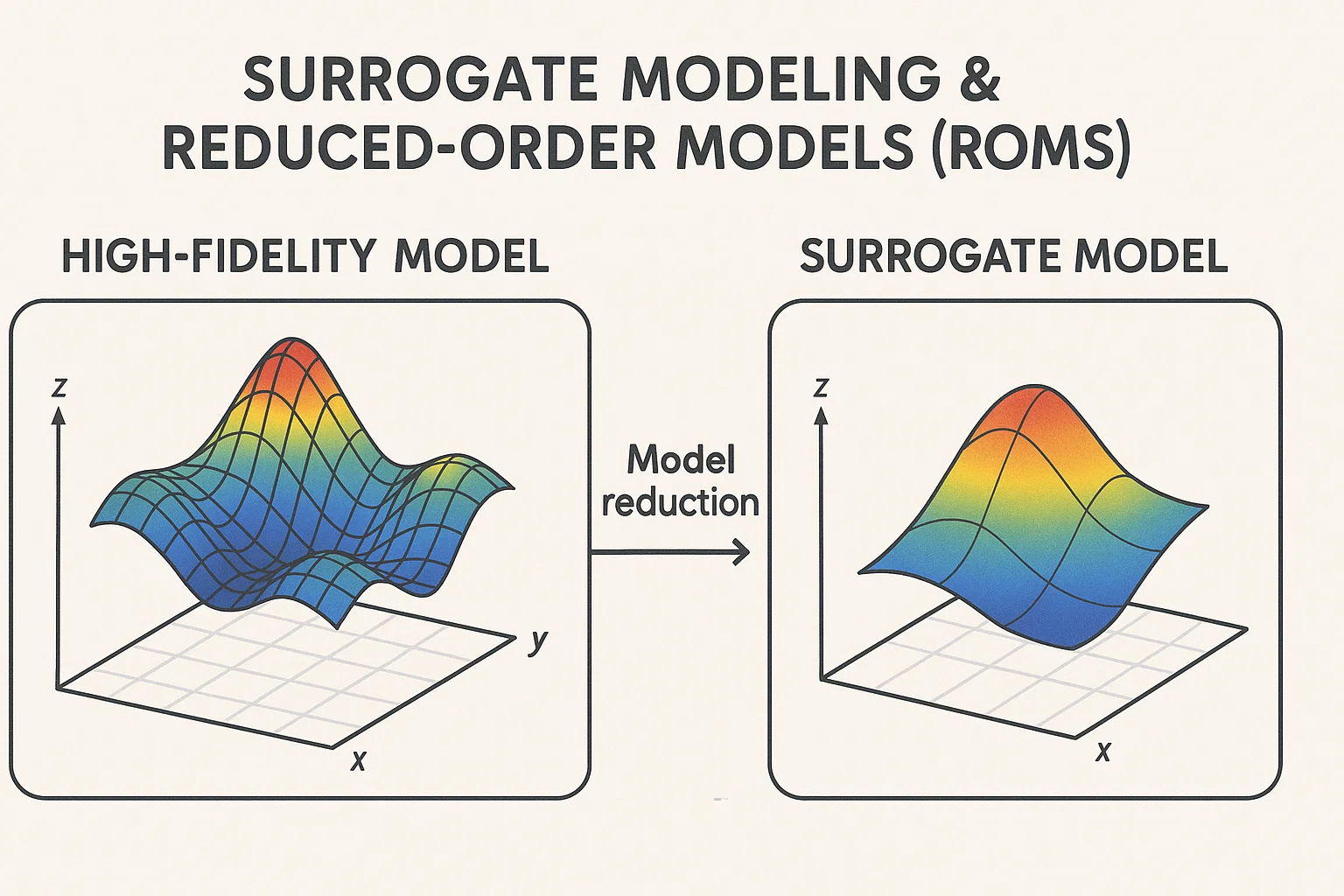
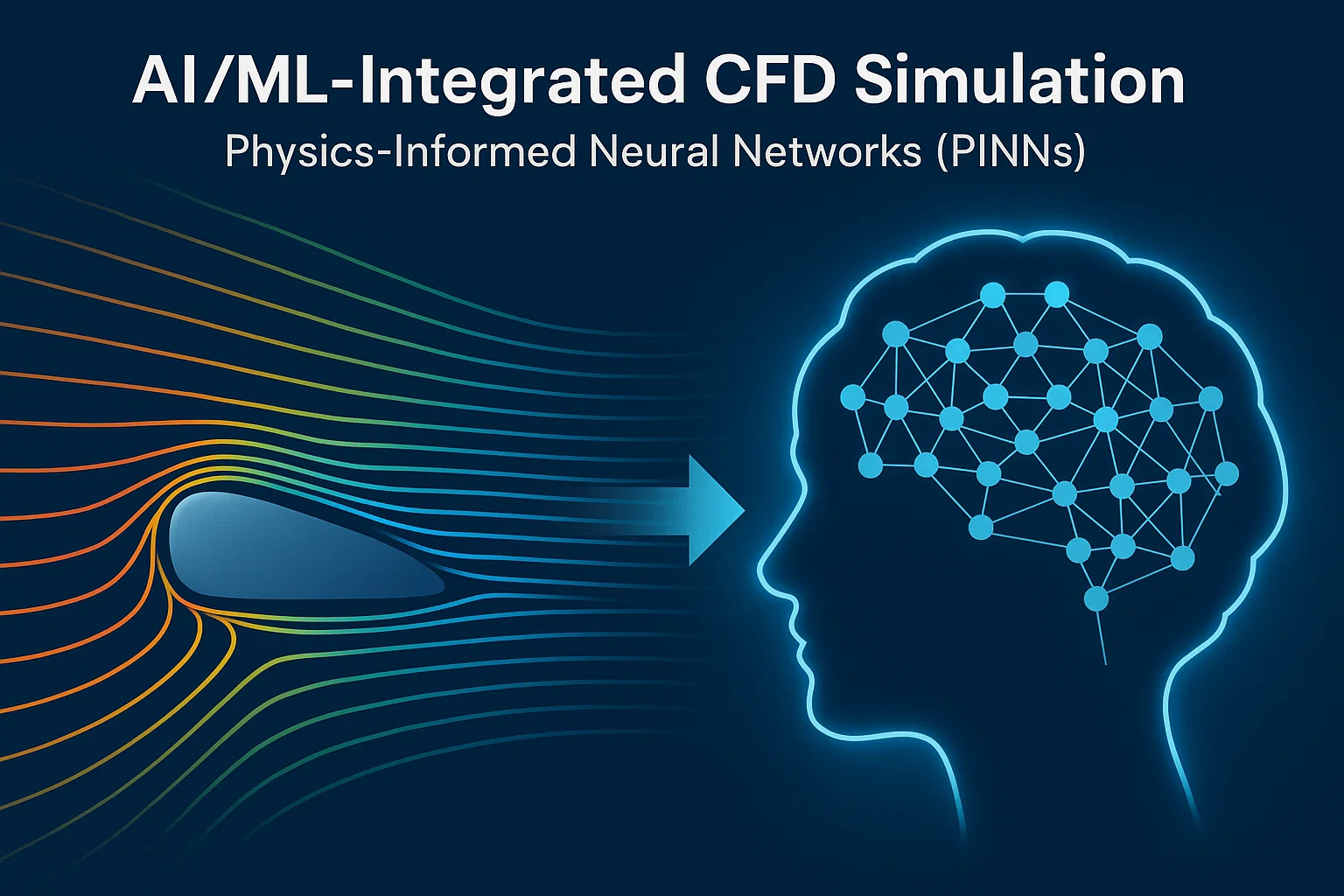
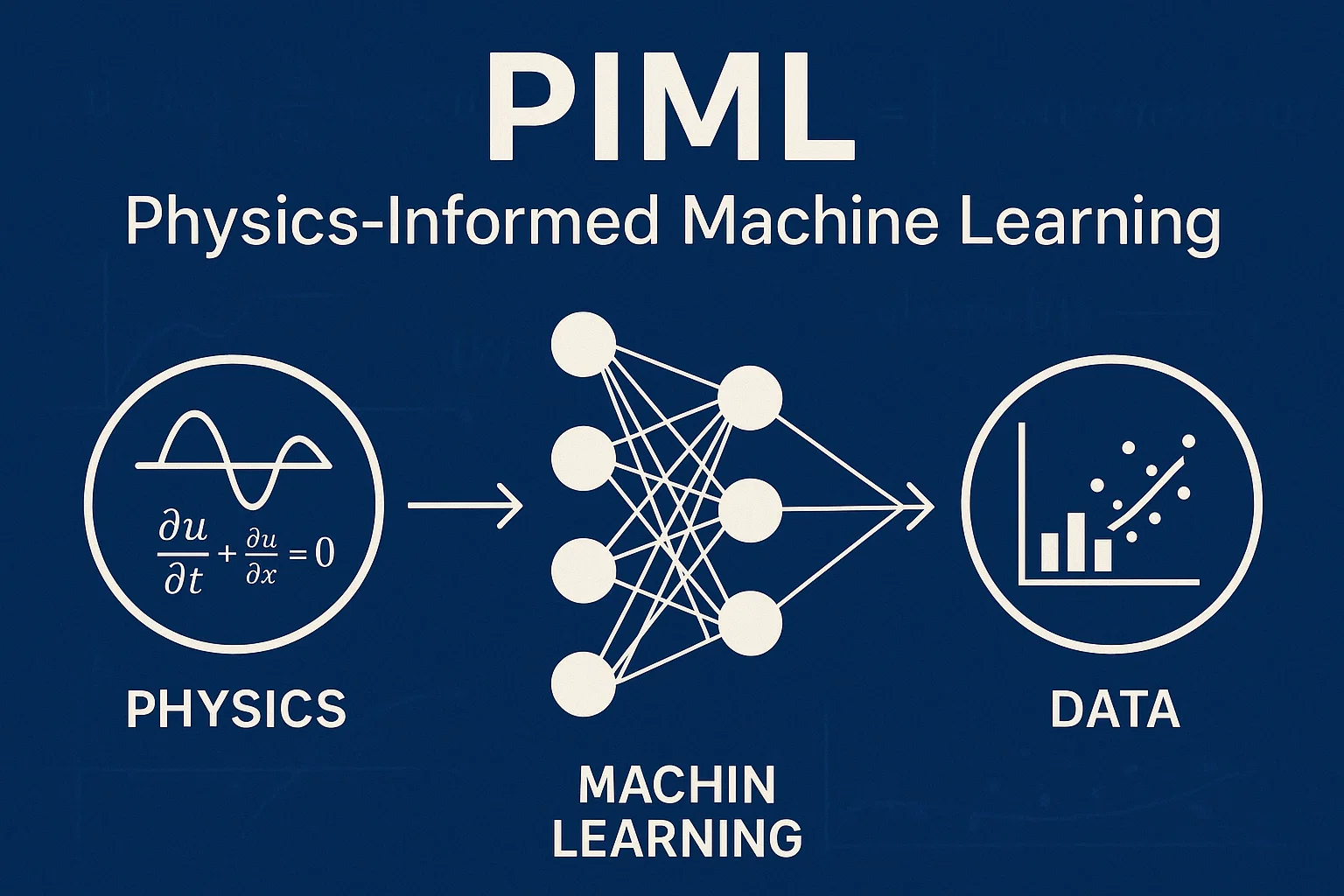
Physics-Informed Neural Networks (PINN / PIML) & Surrogate Modeling / Reduced-Order Models (ROMs) for CFD & FEA
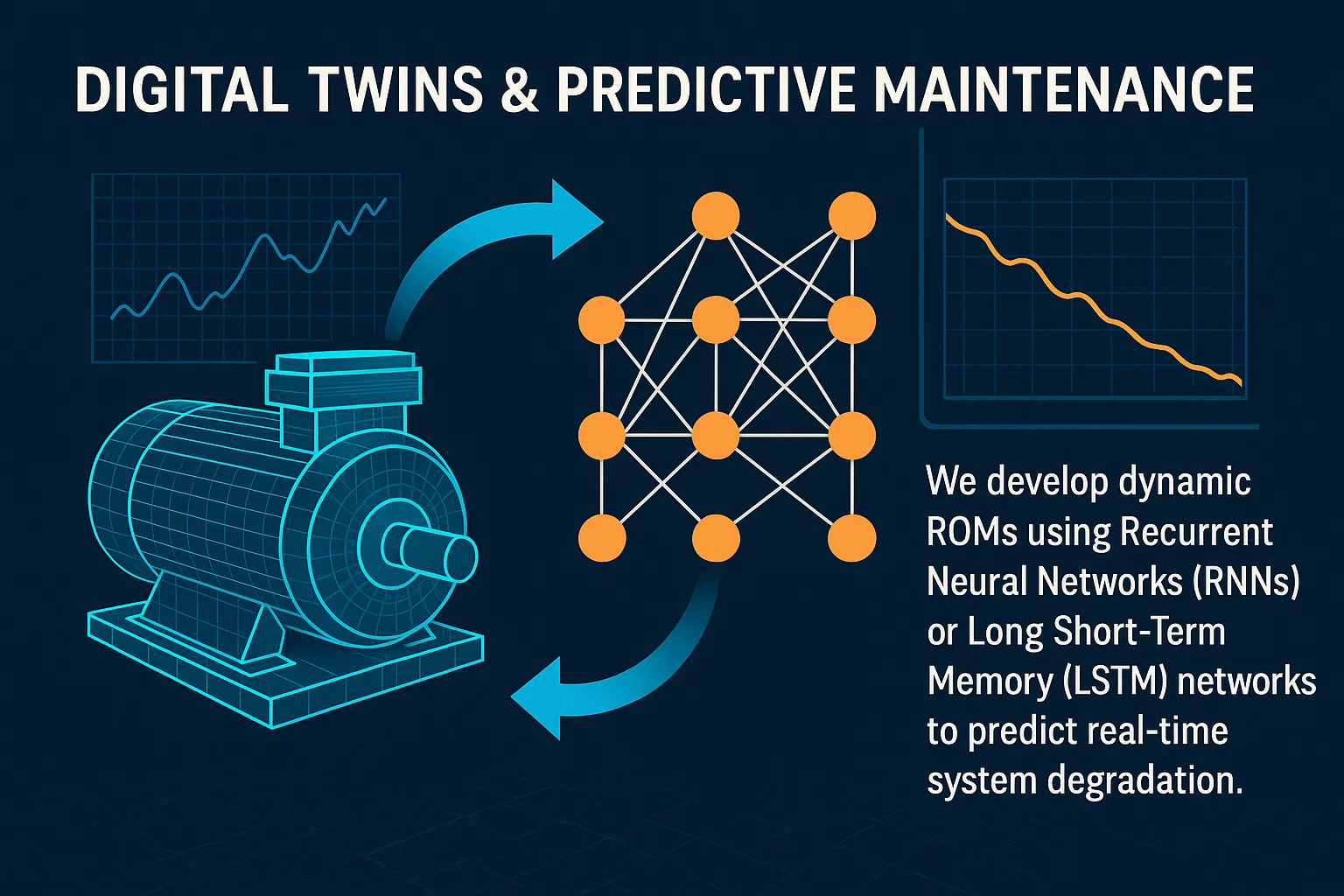
The AI/ML-enhanced CFD/FEA framework accelerates simulations 5-10x faster while maintaining <1% error margins. It integrates multi-objective Bayesian optimization for 15-30% weight reductions and GANs for compliant topology designs. Data-driven modeling employs Physics-Informed Neural Operators (PINO) and enables real-time flow/stress predictions, outperforming traditional solvers by 90% in speed.
Reinforcement Learning-driven adaptive meshing reduces cell counts by 40-60% without compromising resolution. Anomaly detection uses GNNs to flag non-physical results and mesh artifacts. Uncertainty quantification leverages stochastic networks with Monte Carlo dropout for probabilistic outputs, predicting confidence intervals for critical parameters. These tools ensure robust, efficient, and reliable simulation outcomes across industrial applications.